XGEN AI

XGEN AI helps eCommerce teams use generative AI across search, recommendations, and on-site shopping experiences.
The product was already solving real merchandising problems. The opportunity was to give the company a brand and website that made that value easier to understand—and credible enough to sit alongside the global brands already using it.
Digital Designer
Creative Direction, Brand Design, UI/UX Design, Website Design, Webflow Development
Nick McEvily, Senior Product Manager
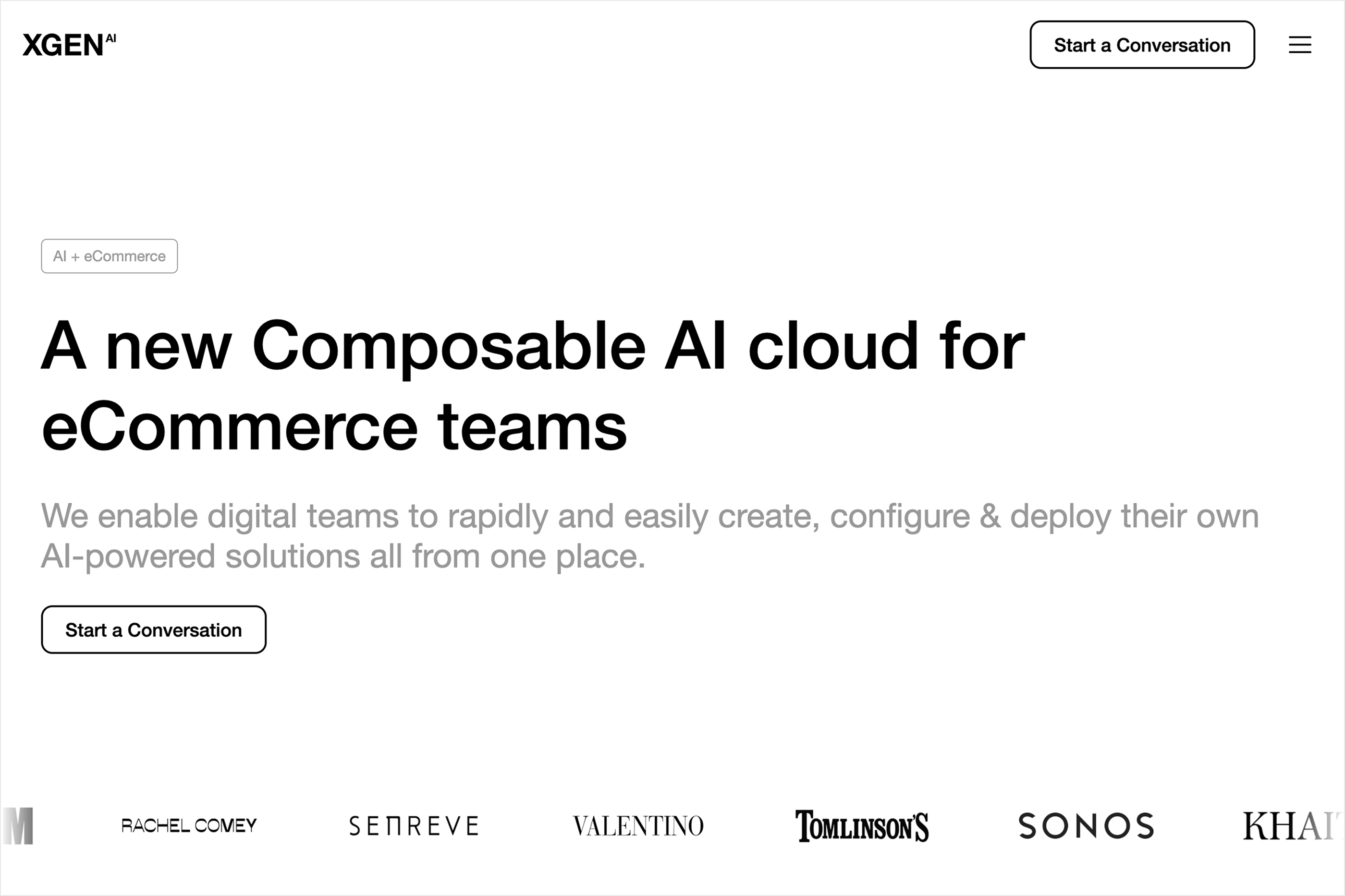
XGEN AI was positioning itself around Composable AI for eCommerce.
Search, recommendations, and conversational shopping were already part of the platform, but the digital presence still felt closer to an early-stage technology pitch than an established enterprise product.
The website needed to move away from abstract cloud language and make the actual product easier to see, understand, and trust.
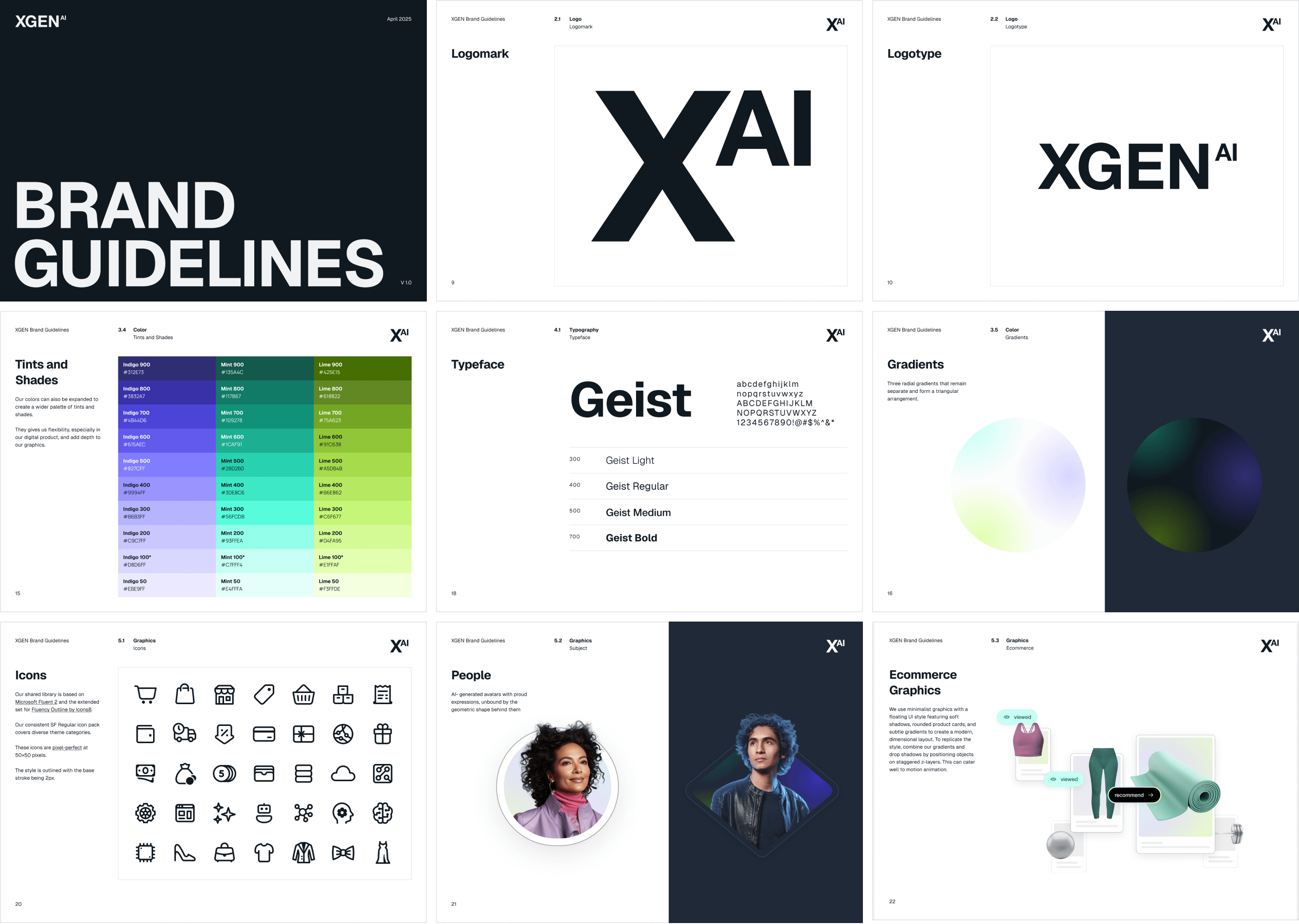
The identity needed enough restraint to work in enterprise software while leaving room for the product to feel expressive.
A geometric X with a superscript AI became the recognizable core of the system.
Black and white kept the foundation editorial and precise, while mint, indigo, and lime introduced energy through gradients, product graphics, and supporting moments.
The system stayed intentionally quiet around the logo so the shopping experience could become the visual protagonist.




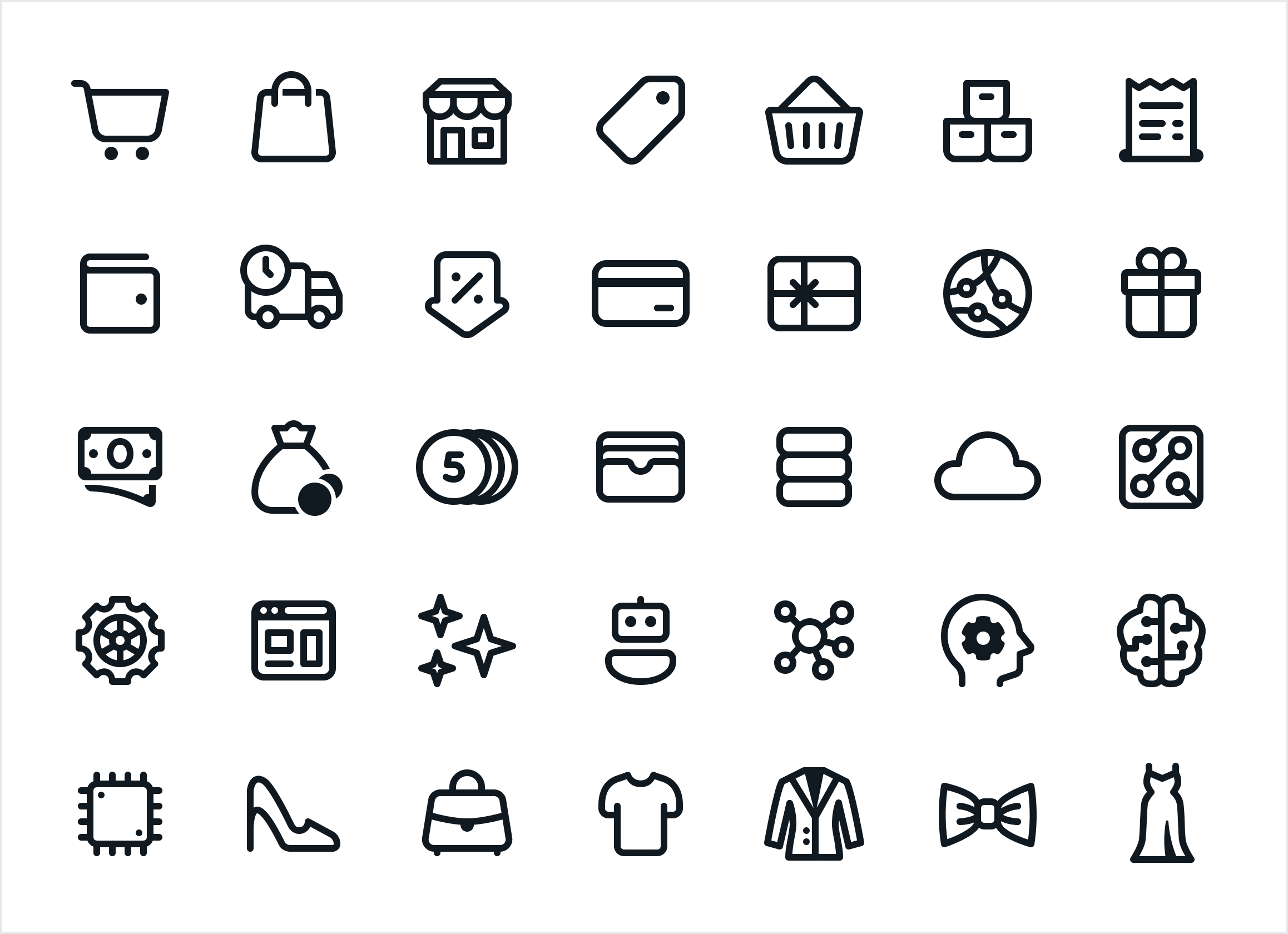
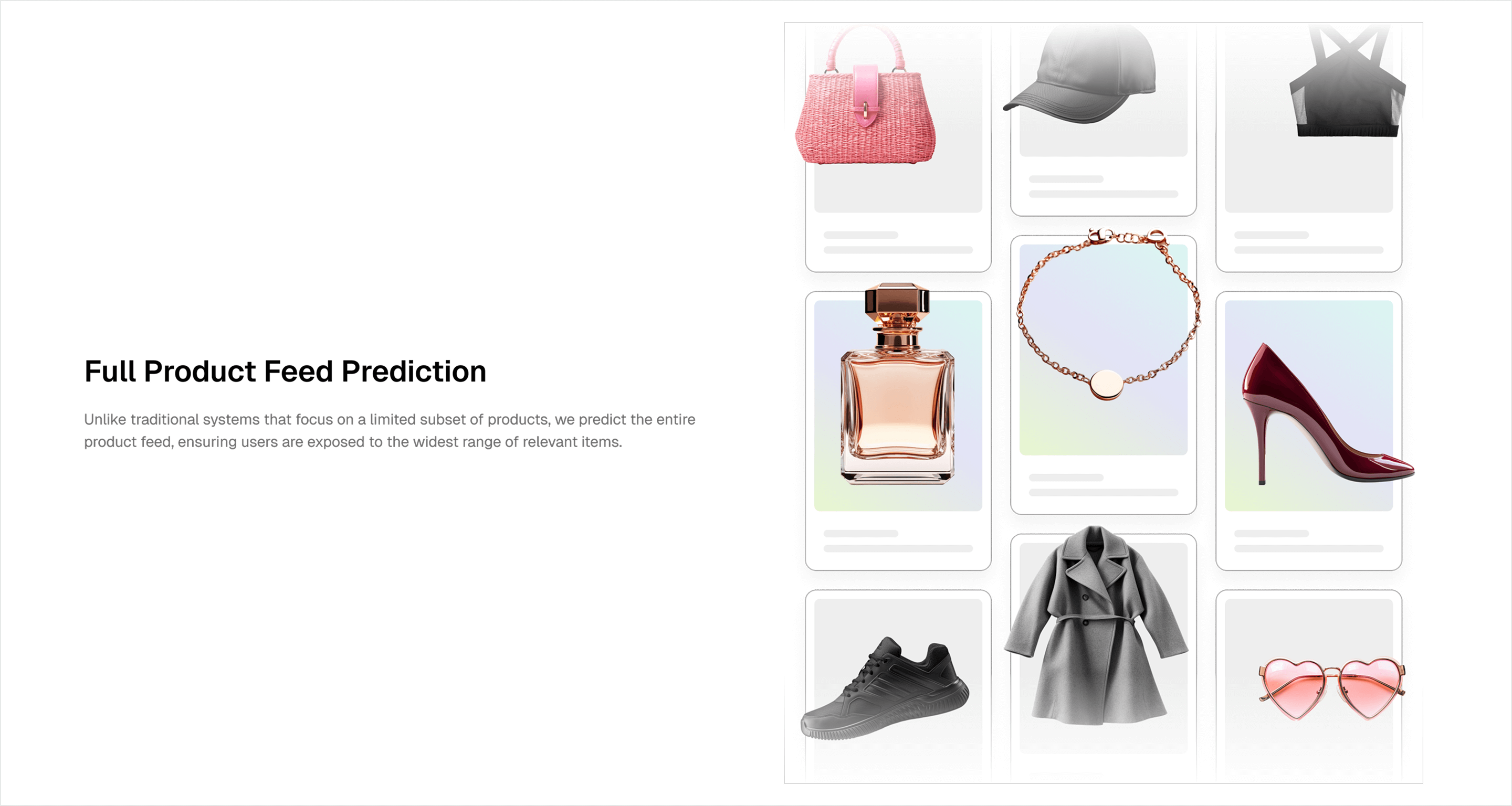
The product was easier to explain when the graphics looked like the thing customers already understood: eCommerce.
Instead of relying on abstract AI imagery, we built compositions from products, recommendations, shopper behavior, UI cards, and human portraits.
That gave the brand a visual language grounded in merchandising rather than technology clichés.

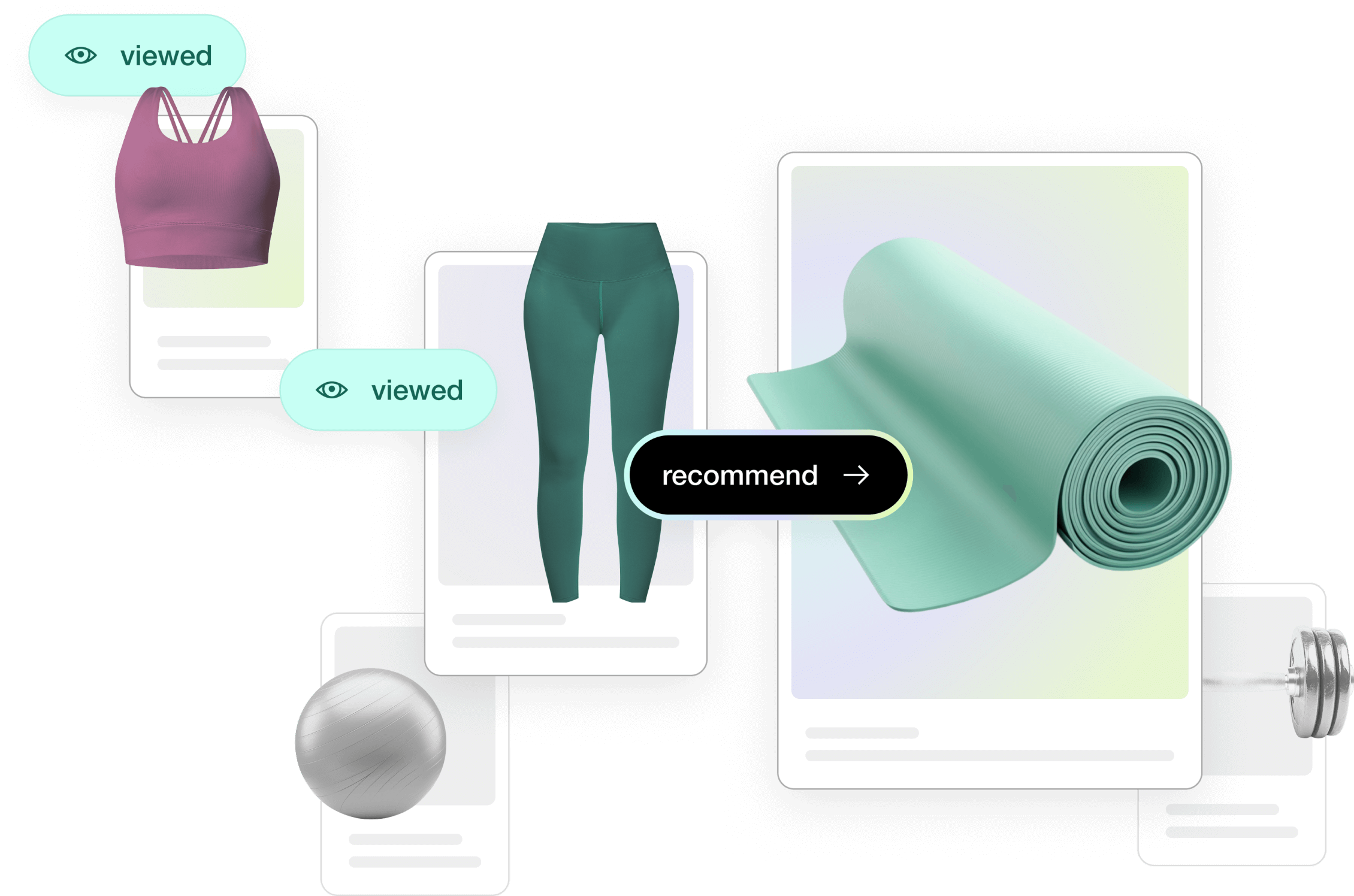
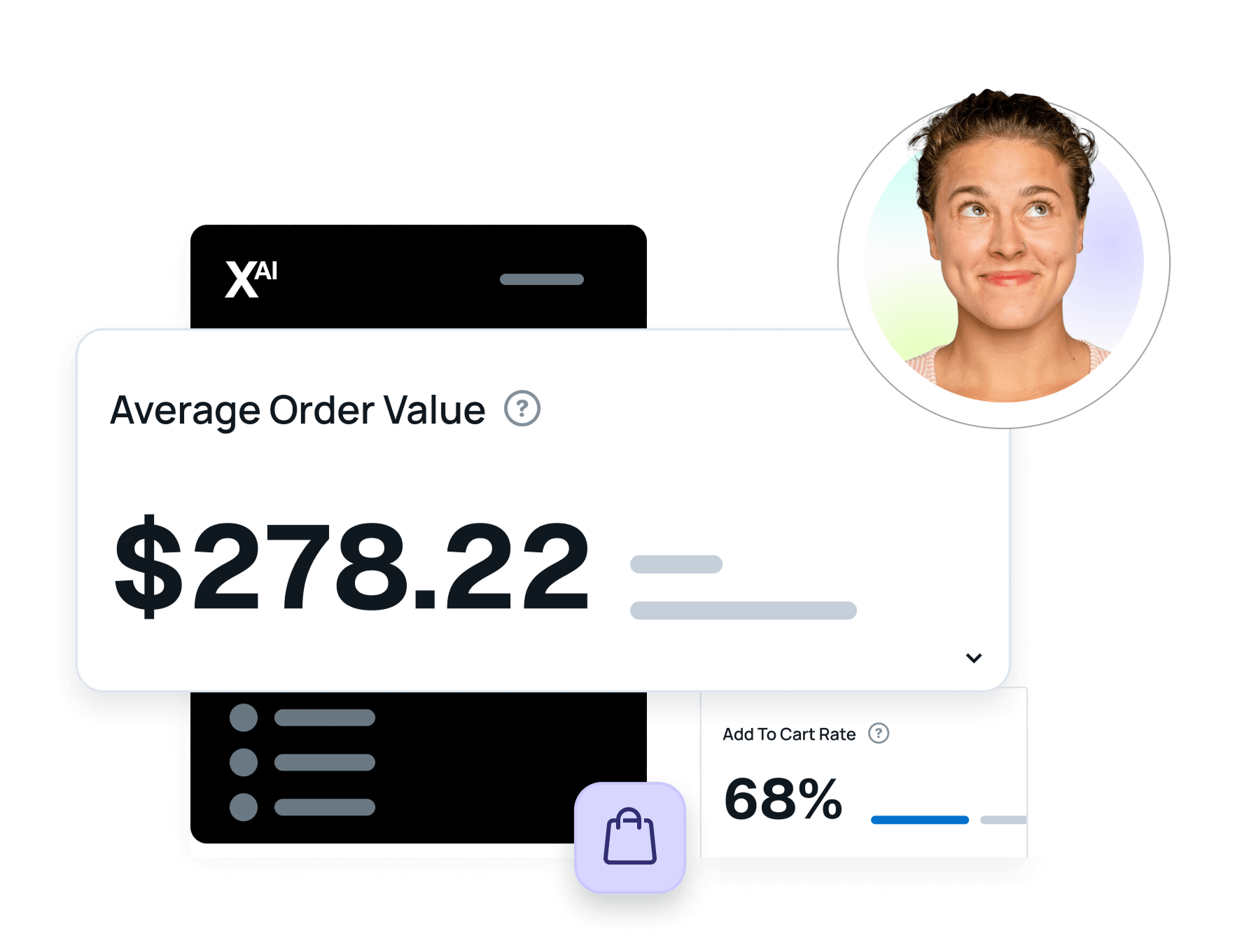
The website needed to communicate XGEN AI as one connected platform without flattening the differences between its core products.
XSearch, XRecommend, and conversational merchandising each received a clearer role, while shared navigation, visual language, proof, and conversion patterns kept the experience unified.
The result made it easier to understand what each product did—and why they belonged together.
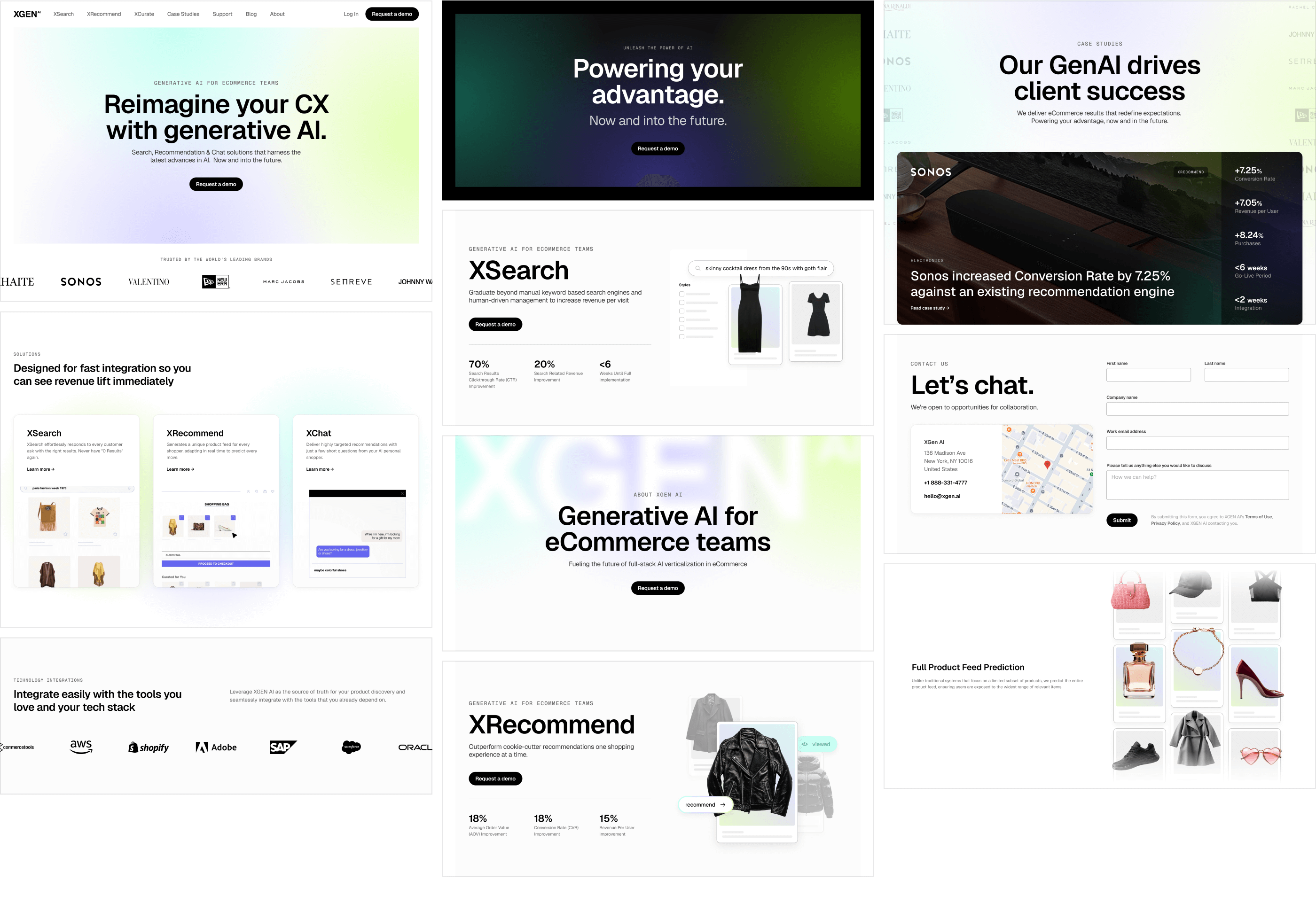
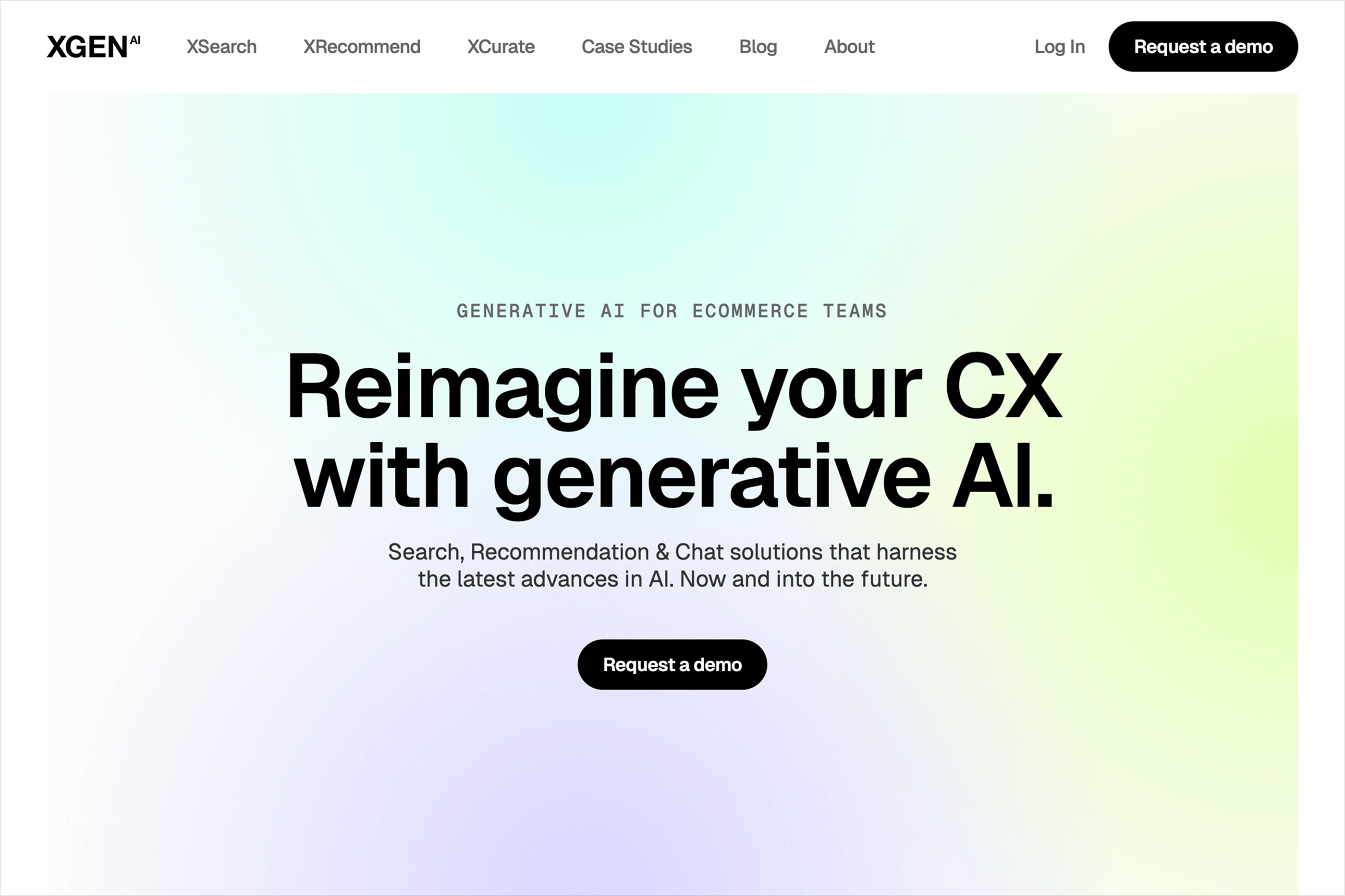
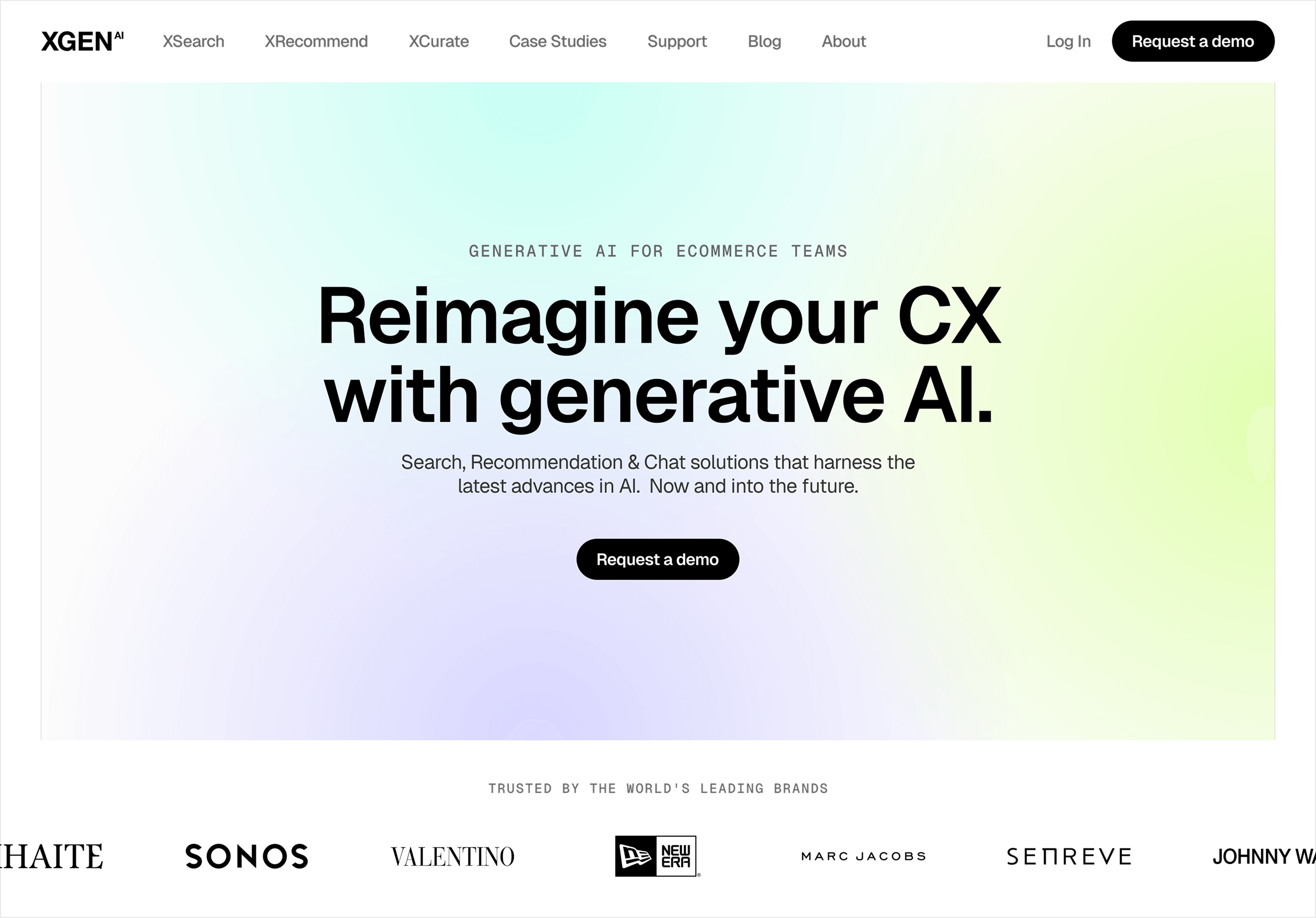
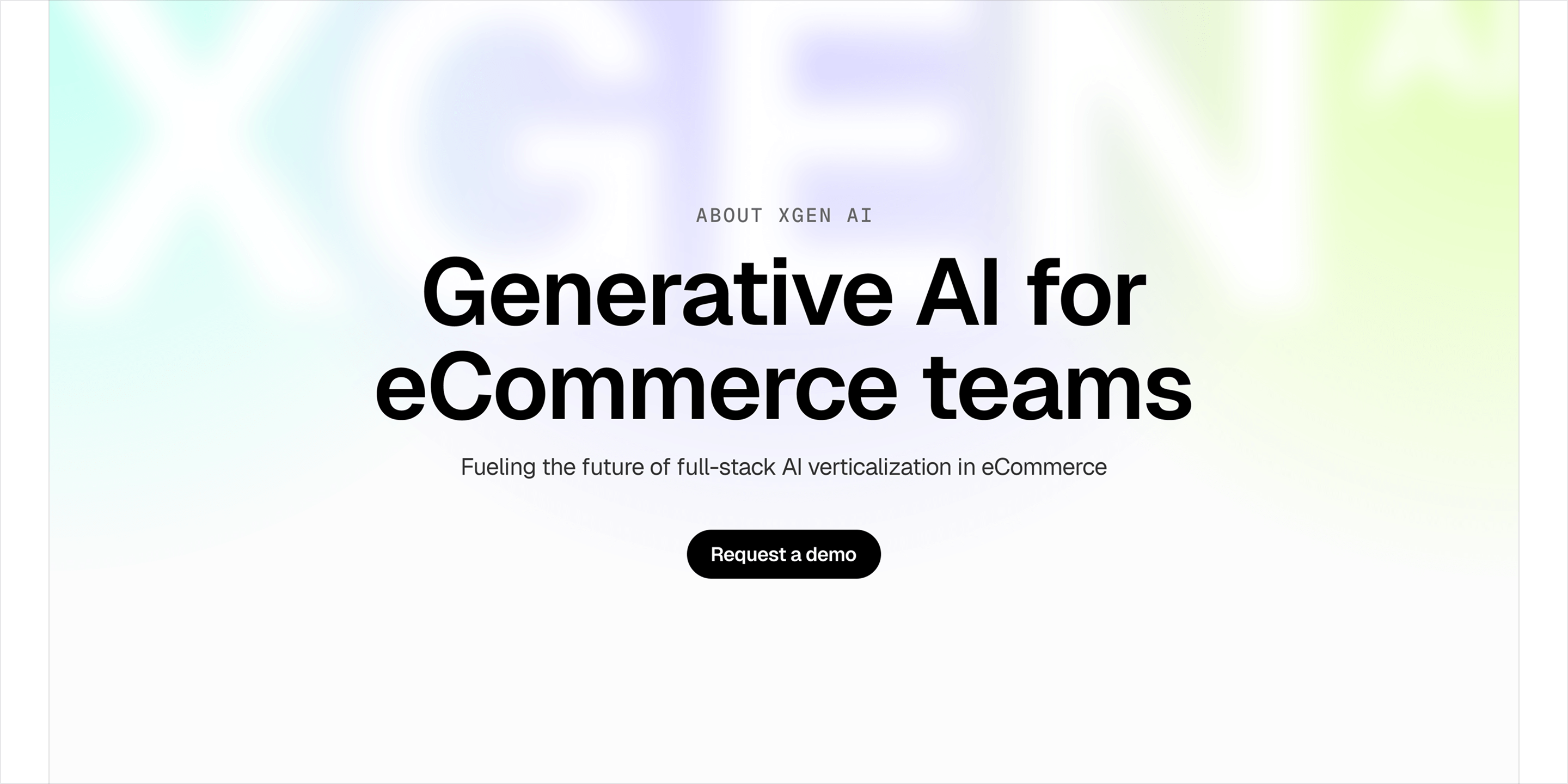
The homepage moves immediately from proposition to product.
The hero positions XGEN AI as generative AI for eCommerce teams, followed by recognizable customer logos, the three core solutions, integrations, and proof.
One primary action stays consistent throughout: Request a demo.
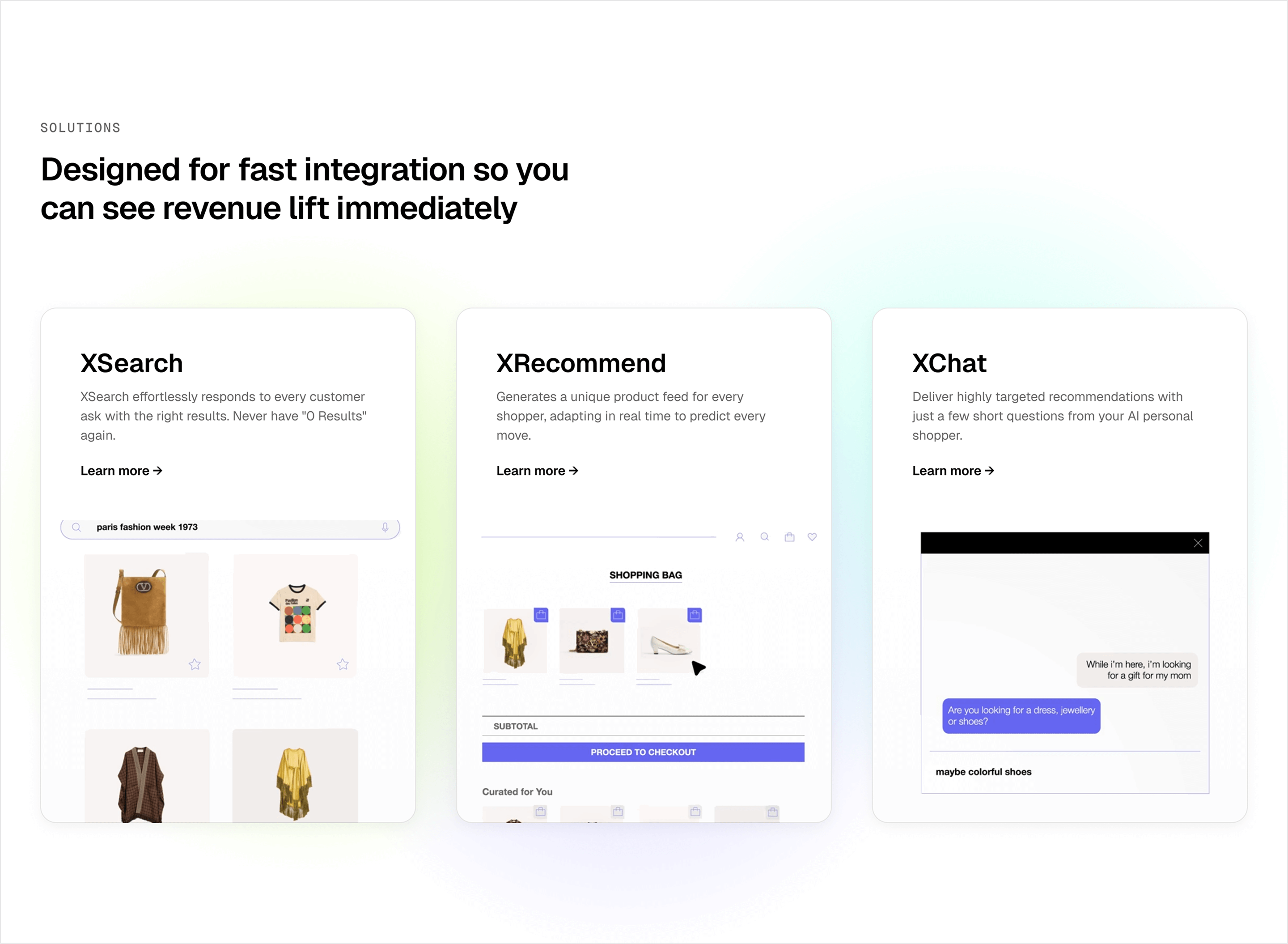

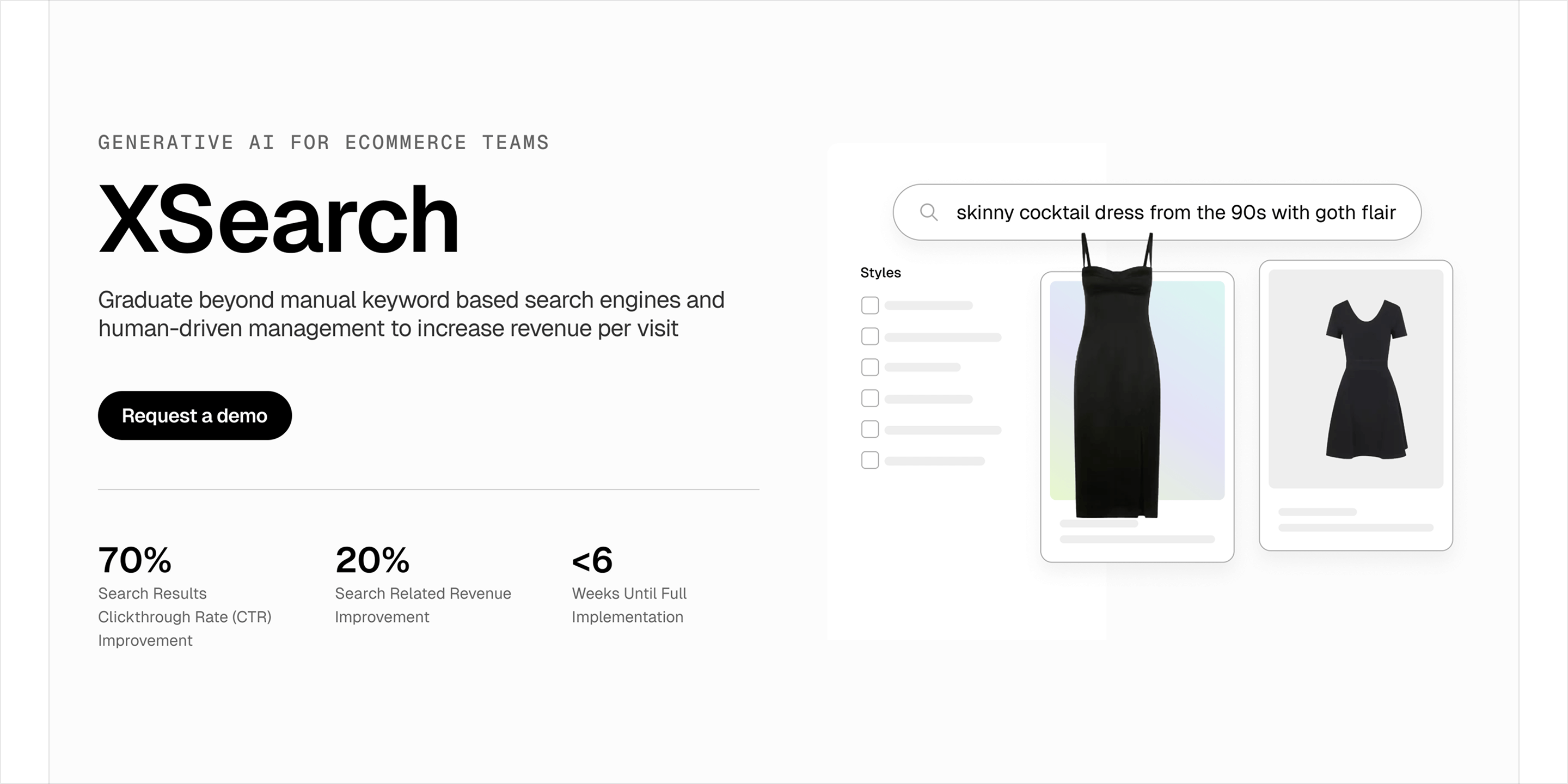
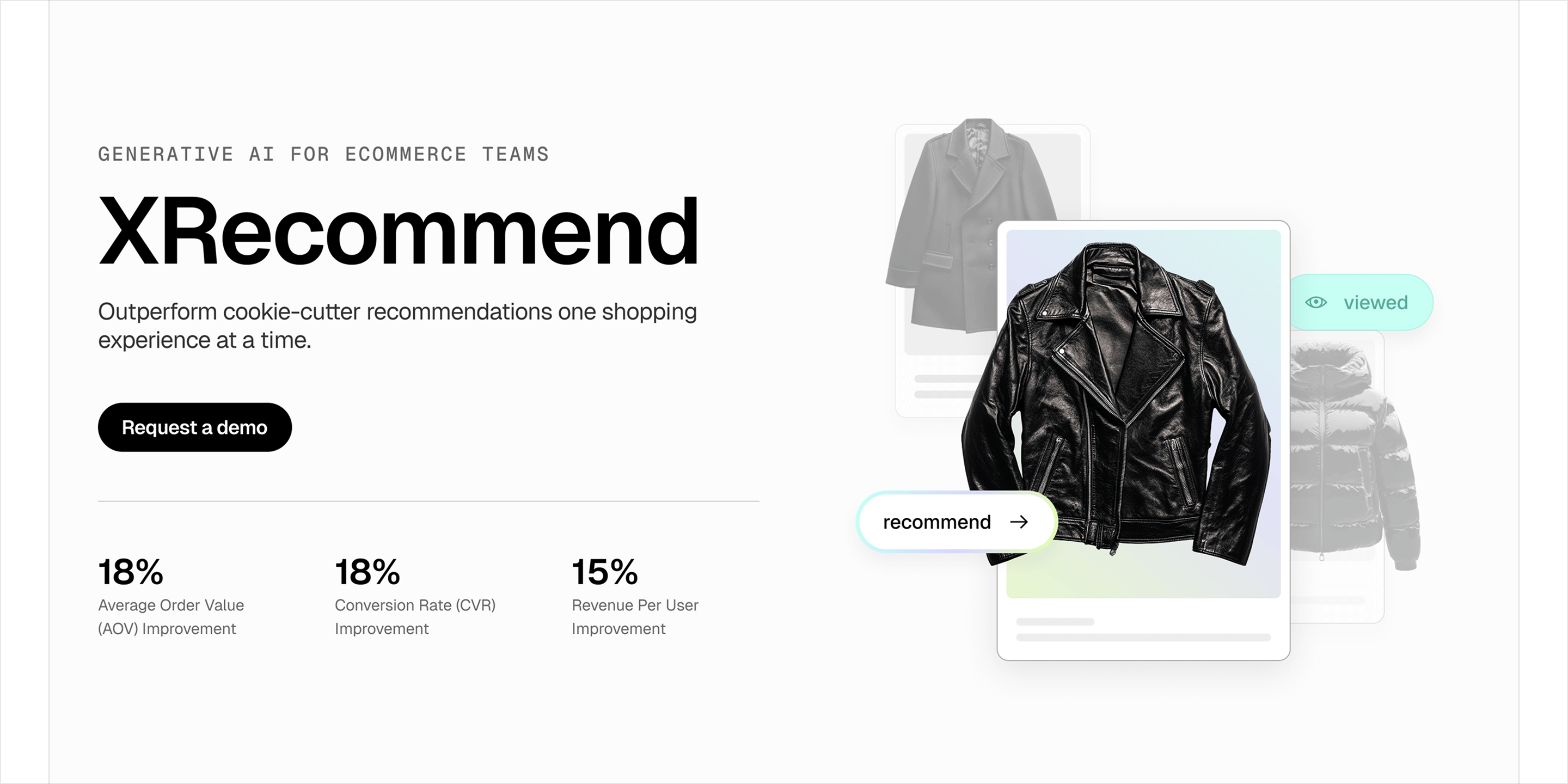
Each product page needed to communicate a technical capability through a shopper outcome.
XSearch uses natural-language queries and relevant results to make discovery tangible.
XRecommend shows personalized product feeds and merchandising signals.
Supporting compositions extend the same language across catalog prediction, recommendations, and other product scenarios.
The technology stays underneath.
What visitors see is a better shopping experience.
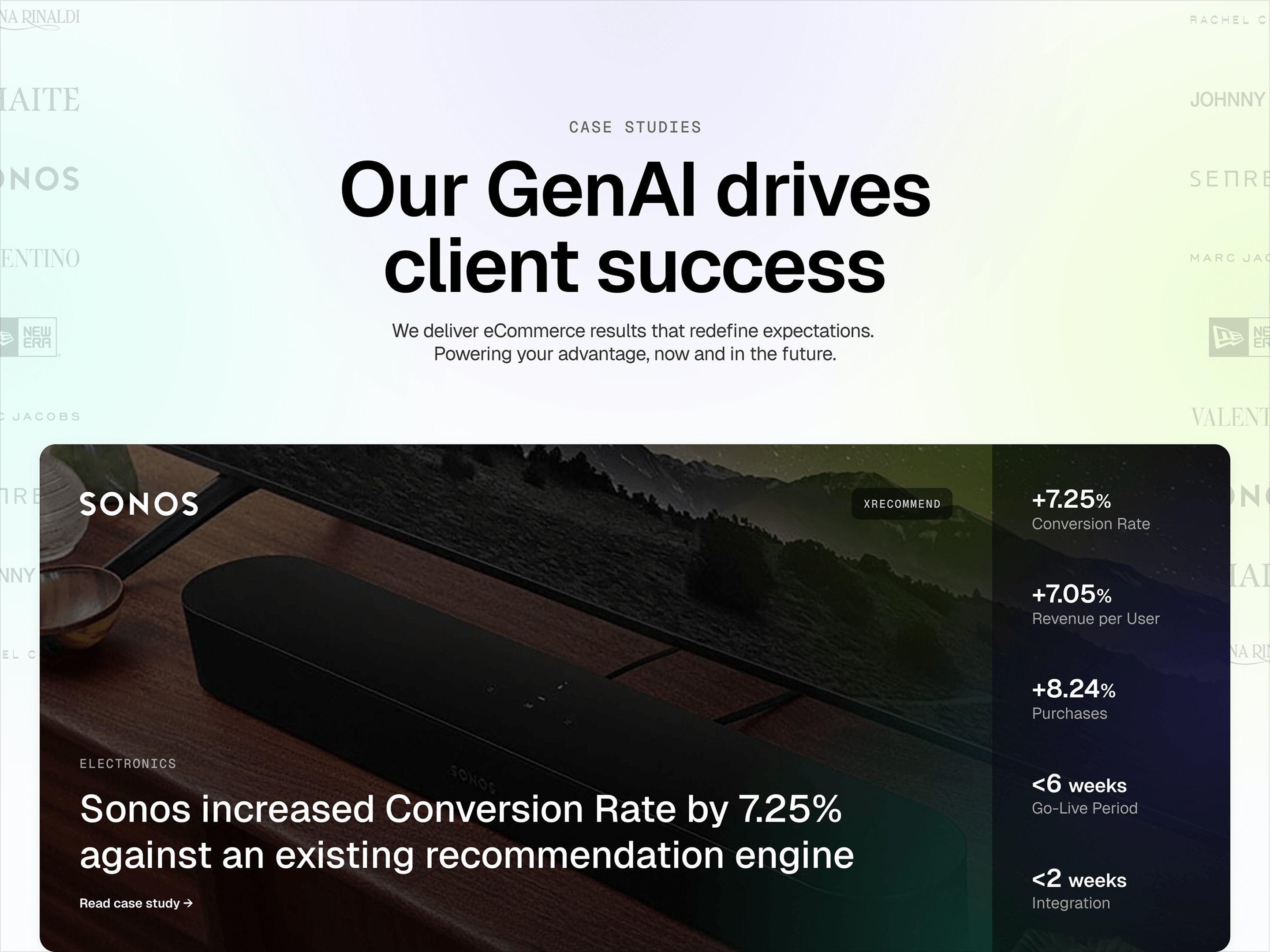
XGEN AI already worked with recognizable consumer and luxury brands.
The website needed to make that credibility visible.
Customer logos appear early, while case studies give published outcomes and individual product stories more room later in the journey.
That proof helped shift the brand away from experimental AI and toward technology already operating in real commerce environments.
The same structure extends across product pages, case studies, company content, and conversion.
Heroes share a consistent anatomy. Product pages add relevant statistics and graphics. Collection pages introduce featured stories. Company pages use the same gradients and typography with less product density.
The result is a system that can grow without every page becoming a new visual direction.

High-fidelity mockups established the direction, then the website was built in Webflow as a reusable system.
Design and implementation stayed close enough to refine responsive behavior, gradients, product compositions, and content directly in the browser.
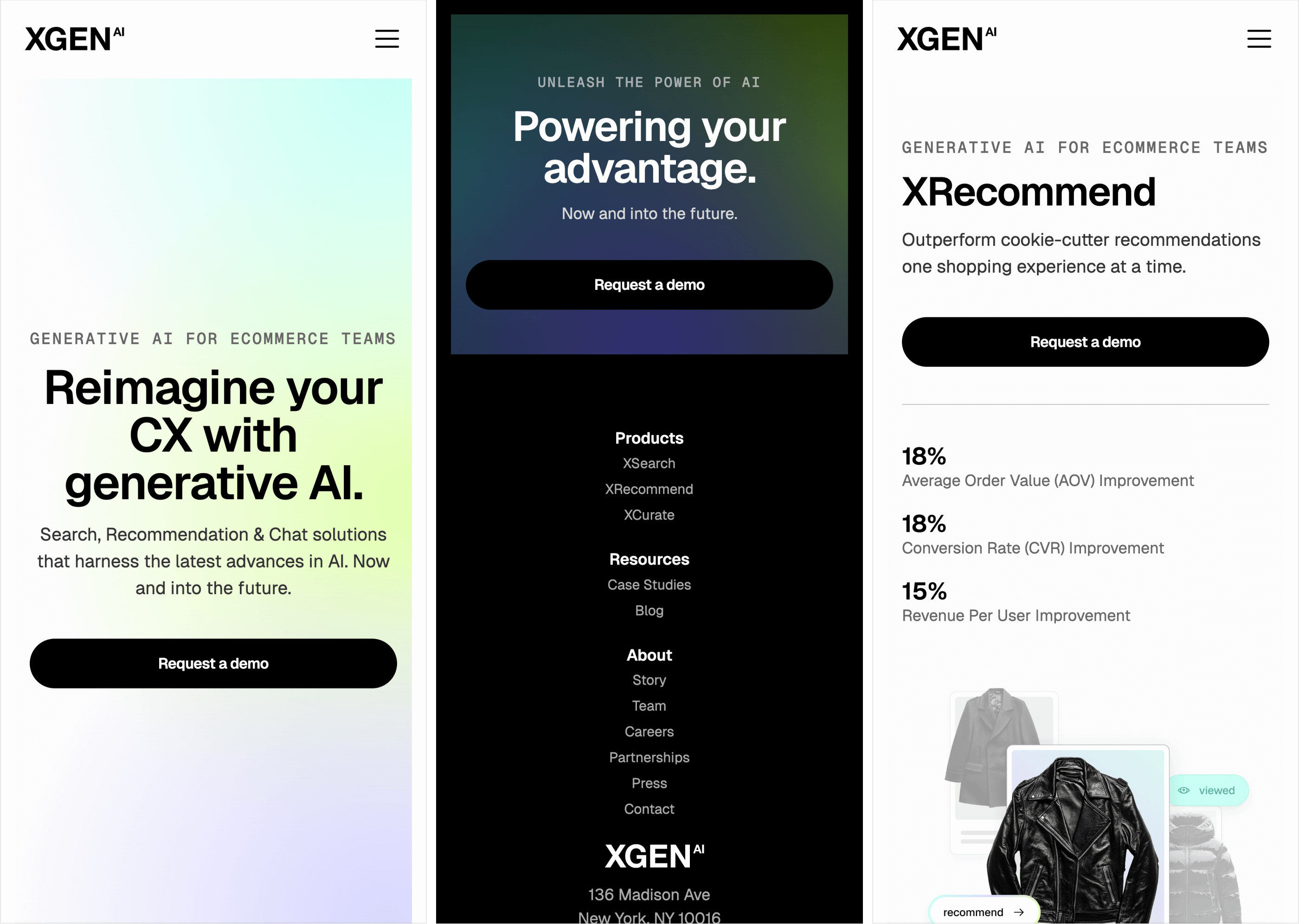
On smaller screens, layouts stack rather than shrink, preserving hierarchy and keeping product graphics, proof, and forms usable.
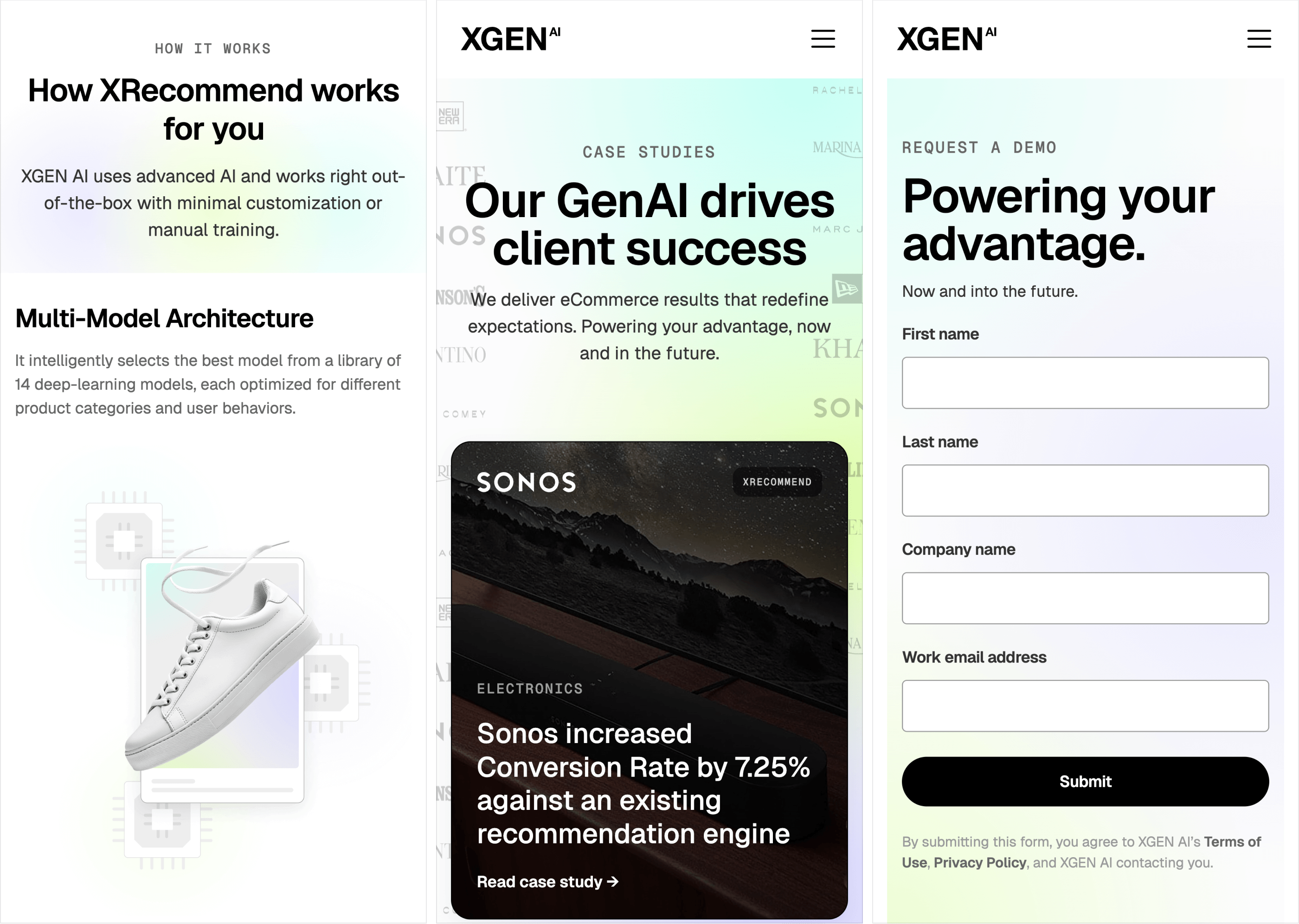
The refreshed brand and website gave XGEN AI a more mature platform for explaining its technology, products, and customer value.
Search, recommendations, and conversational merchandising became easier to understand as one connected system.
And the visual language made generative AI feel less like infrastructure and more like something eCommerce teams could actually use.
XGEN AI was later acquired by Zoovu.
Max has been a collaborator of mine for years and the things we’ve made together are the proudest of our individual careers. It’s been an honor.

Brand, product storytelling, website design, and development worked together to make XGEN AI feel less like an AI platform to decode and more like a merchandising system ready to use.